On November 7th, 2014, Dr.
Bill Pennington, a Professor and Director of the Molecular Structure
Center at Clemson University, came to UNCG to talk about research he has
been working on regarding halogen bonding. Halogen bonding is similar to but
stronger than hydrogen bonding because halogen bonding's interaction is strong,
selective and directed. Although its been around for quite some time, its been
known by many different names. . Halogen bonding has been known as incipient
valence shell, outcasts of our present chemical system, charge-transfer
interactions and/or donor-acceptor reactions, before the term “halogen bonding”
was coined by Anthony C. Leugen in 1998. Halogen bonding occurs between a halogen
(X Bonding) and a lone pair found in an atom or molecule. The halogens are
knows as acceptors of electron density.
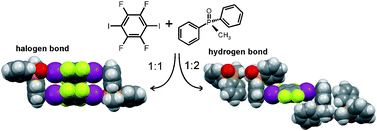
Dr.
Pennington’s seminar was split into four parts: Halogen bonding (X-bonding),
X-bonding periodic table, Polyiodides and metapolyiodides and application of
halogen bonding. He defined halogen bonding was as a non-covalent interaction
involving halogens as acceptors of electron density. Hydrogen acts as acceptor
of electron density similar to hydrogen bonding.
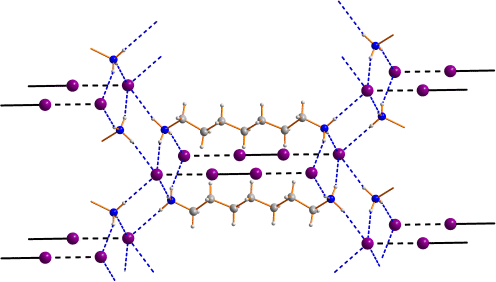
He also spoke about crystal chemistry.
Crystal chemistry involves halogen bonding due to halogen bonding being strong
and selective. The strong and selective bonding is perfect for the designation
of crystals.
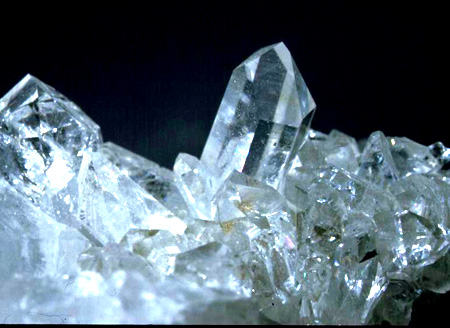
He briefly spoke about scattering, a
technique used to see the structural description of amorphous material,
multi-crystals, and single-crystals designs. As an example of this, he used a
sheet of paper that had the Clemson school symbol on it, and displayed how it
could chance from orange to blue, then bacl to orange.
He also informed us that applications
of halogen bonding include thyroid hormone receptor X bonds, magnetic and
conducting materials, liquid crystals, solid state crystals, catalytic
synthesis, and non-particle self assembly.


Your summary is very well written. I wish i had been able to attend this seminar, the mechanics behind halogen bonding is so interesting and is used so much in organic chemistry.
ReplyDelete