

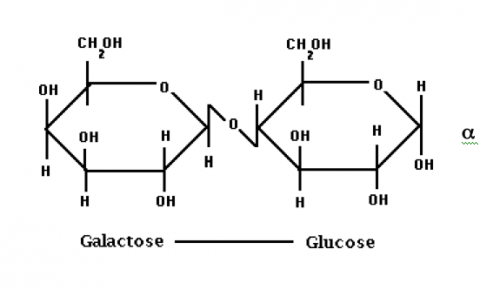
Lactose is sometimes called milk sugar and is a disaccharide. It has the empirical formula of C12H22O11 which is actually the same as both sucrose and maltose; however, the difference is in the structure of the atoms and the bonds. If one looks closely at the structure for lactose, it looks like the molecule is actually two different molecules linked together. Well, it actually is two molecules linked together by an Oxygen atom. The lactose molecule is actually one glucose and one galactose molecule linked together. This amazing structure is what allows the body to break the molecule apart for digestion. Because lactose is actually two molecules linked together, once digestion of lactose begins, the molecule is broken apart by lactase into the molecules of glucose and galactose and then digested.
Lactose comes from milk. Milk containing lactose is developed in the bodies of almost all mammals (one exception). However, lactose can also come as a byproduct from milk processing. Since lactose comes from the milk of mammals, it cannot be found in any plants. Lactose is also found in most dairy products; however, there is a smaller amount found in dairy products other than milk. Other than foods, lactose can be used in drugs. Because lactose is easily compressed, it is often used in making tablets (pills) of other drugs. Although lactose can cause stomach irritation to people who are lactose intolerant, it is actually used in some over the counter drugs that help treat stomach acid.
Resources:
1. http://www.encyclopedia.com/topic/lactose.aspx
2. http://www.britannica.com/EBchecked/topic/327389/lactose
3. http://www.cambridge.org/us/books/kiple/lactose.htm
4. http://www.drugs.com/inactive/lactose-157.html
Pictures:
1. http://webbook.nist.gov/cgi/cbook.cgi?Struct=C63423
2. http://images.tutorvista.com/cms/images/38/maltose-lactose.png
3. https://www.uoguelph.ca/foodscience/sites/default/files/public/home/wsadmin/images/lactose_0.png

No comments:
Post a Comment